
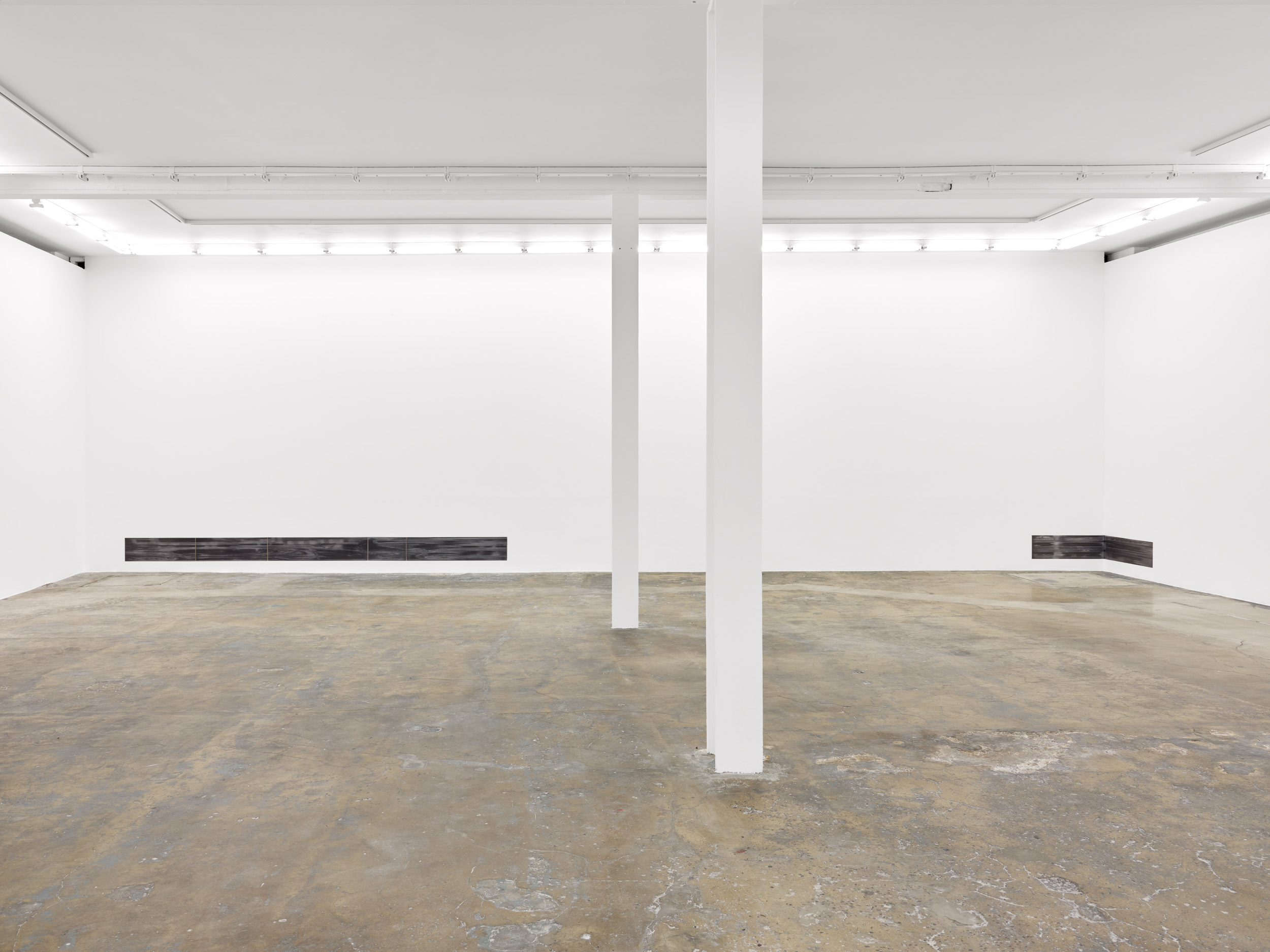
First it was just a sense of the bed trembling, and an image of a slightly swaying road experienced from the interior of a moving car driving right through a former coach colour factory, from Central Park to the financial district. How silly to consign this quivering across the Atlantic to the natural cause of an earthquake. The Left is no longer loved, condemned to wander the seas forever. Only instead of the seas, one chooses the motorway as the setting. Surroundings stretch into spectral lines. Only at certain moments will the viewfinder arrest a person or an object and figure it as a representation. Perhaps these images were never meant for the human eye. Arising from another level of consciousness, they function as models. A glance at the mirror attests: Events are closer than they appear. At stake is less the construction of an authoritative account of truth than the laying out of a configuration of existing accounts through which problems are cut into the landscape of a vertiginously mediated reality. Instead of closing them, art’s objective is oriented toward the holding open of gaps. Gaps undergo a metamorphosis rather than disappearing into the insignificance of voids. A distinction that Marina Vishmidt has poignantly made:
“Gaps rather than voids, for instance, because a void already hypostatises its emptiness as completeness, whereas a gap subsists in relation. A void is thus always aspiring to the status of an object, whereas a gap is cut into time, or language. It’s a spacing that telescopes in and out of an (infra)structure, and may give an impetus for connecting beyond it.”
—Excerpt from Never Closing the Gap by Steph Holl-Trieu.