
“I don’t think I ever thought much about sadness as a theme or something that propelled me… maybe more fear than sadness. Maybe they are linked? Like the sex clubs. I photographed them while they were still open for business, they just happened to close down a few years after my series was complete, but I feared this might happen and what would happen once they closed? What safe place would we have then? Back to the streets? The parks? Tea rooms? All these potentially violent spaces. So the fear of losing something (I found lots of value in), was perhaps a strong emotion for me. I am not a naturally optimistic person at all.”
—Dean Sameshima, 2014
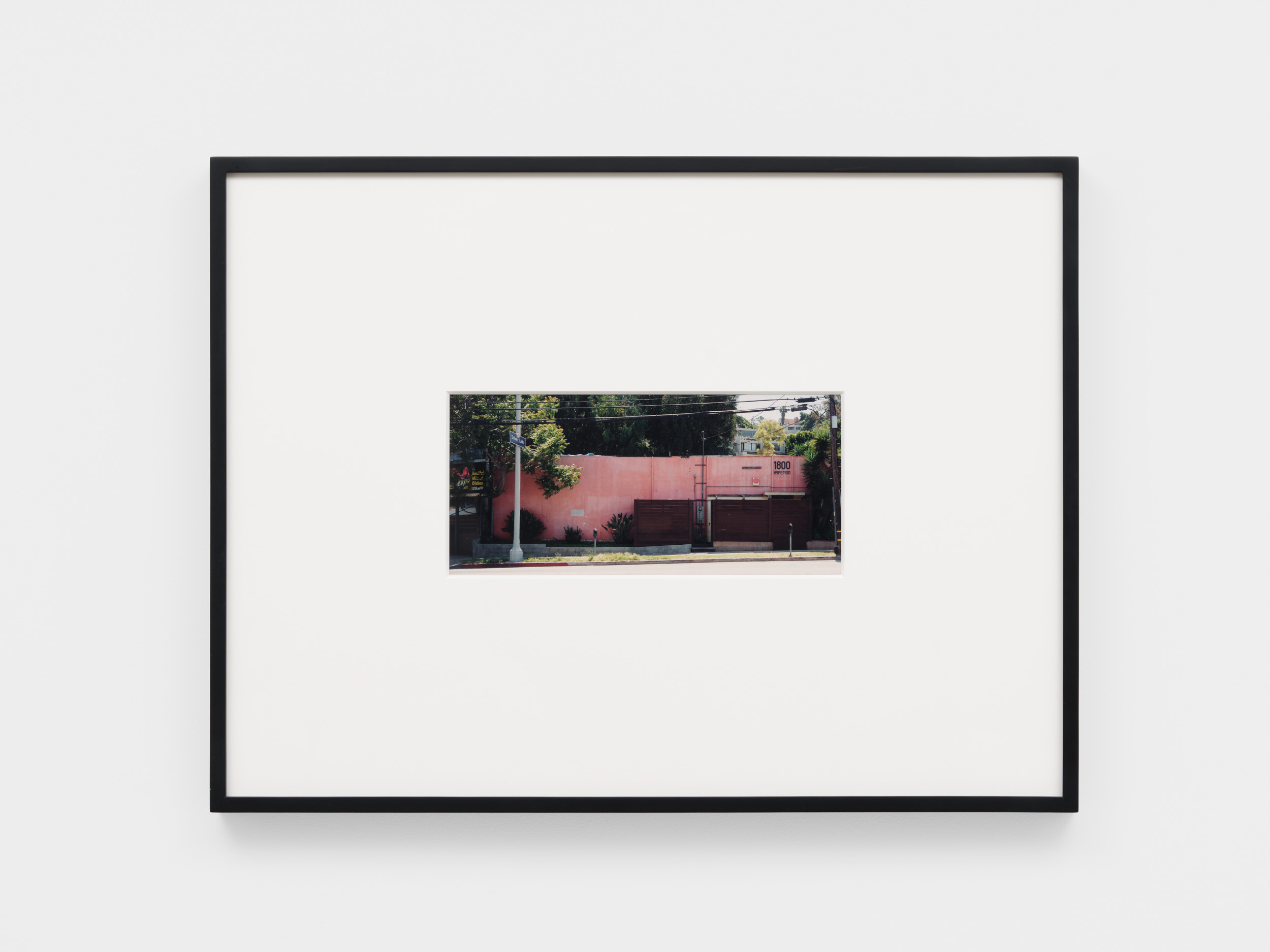
The body of work that Dean Sameshima titles Wonderland (1995–97) includes four series of images that the artist photographed and exhibited during his time studying under Allan Sekula at CalArts. One group commemoratively documents the exteriors of queer sex clubs and bathhouses at the time, mostly located in Silverlake, Los Angeles, which was home to a considerable LGBTQIA+ community prior to its devastation by the HIV/AIDS pandemic. In this exhibition, titled after the series, Sameshima brings together all seven of these images alongside a selection of photographs of specific sites in nearby Griffith Park in Los Angeles and Harbor City Recreational Park in Lomita, which were both notorious cruising areas. Wonderland marks the first time a substantial group of these works has been shown together since the early 2000s.
This early interest in documenting a community without representing an individual, but instead through a rigorous archiving of spaces, objects and experiences has continued throughout thirty years of Sameshima’s practice. In his more recent series being alone (2022) in which the artist depicts the lone viewers of adult films in now mostly shuttered cinemas across Berlin where he is now based, Sameshima removes any imagery from the screens. This decision refocuses attention on the atmosphere of the theatre, the viewing experience of the figure and the perpetuity of aloneness. With a similar pragmatic approach to his images, the works in Wonderland were shot in medium format, which prioritises the capturing of maximum information in a single image over depth of field or speed—as per the recommendation of Sekula, who himself preferred an anti-aesthetic redefinition of documentary photography. Evidential in these early works is the influence of the New Topographics photographers, whose austere pictures prioritised a similarly stark approach to their depictions of both urban and rural landscapes.
Now representative of lost time and place, Sameshima prefigured a kind of grief in these images, photographing these sites during the day, unpopulated and virtually unrecognisable. Although likely more immediately identifiable to Sameshima and his contemporaries at the time, these building exteriors or urban spaces were left deliberately unmarked to prioritise the safety of their patrons or visitors. The absence of figure or noteworthy detail in these images, was therefore essential to their subjects’ existence. Sameshima discovered many of these spaces through research in local papers like Frontiers—a free, weekly, gay publication—and gay phone lines, as well as via the men he hooked up with, who would often share their reviews and tips on where else to go, which areas were safe, recent police busts or locations where undercover officers were often stationed. In the catalogue accompanying Public Sex, a survey exhibition of Sameshima’s work in 2014 at She Works Flexible in Houston, curator Andy Campbell detailed the personal significance of these works for the artist: “These photographs of places without people lay out one of the core concerns of Sameshima’s artistic career: the politics of identification as evidenced through the tension between surveillance and concealment—especially concerning sex in public and semi-public spaces.” Despite their palpable stillness, there is much activity implied in the photographs, but the artist chose—and continues to choose—to catalogue the spaces themselves rather than what happens within them.
The title of the series came from a British independent art house film, The Fruit Machine (1988) that was released as Wonderland in the US in the late 1980s. Sameshima recalls being struck by the plotline which follows two young gay men fleeing an assassin who they witnessed murder a drag queen and while being pursued, the protagonists find safety in an aquarium called “Wonderland”. Written as a metaphor for a time period marred by the destruction of HIV/AIDS, for Sameshima this narrative offered the idea of an escape, or a sanctuary from being hunted—either by the virus itself or policing authorities. Both Wonderland, being alone and many series in between offer Sameshima a means to confront a fear of disappearing spaces and indeed communities in times of crisis—whether HIV/AIDS or the more recent global pandemic.
The two final groups of images that complete the Wonderland series include documentation of drawings found inside various public restrooms used for anonymous sex in Los Angeles, known colloquially at the time as “tea rooms” and abandoned WWII underground army bunkers in Palos Verdes that men would cruise in during the daytime. These works will be included in an upcoming publication that catalogues Wonderland in its entirety, published by Soft Opening and to be released at the end of the show.